



[gpt3]Rewrite the following source article into a completely original, publication-ready Hindi defence news article for TirangaPost.com.
Source Content:
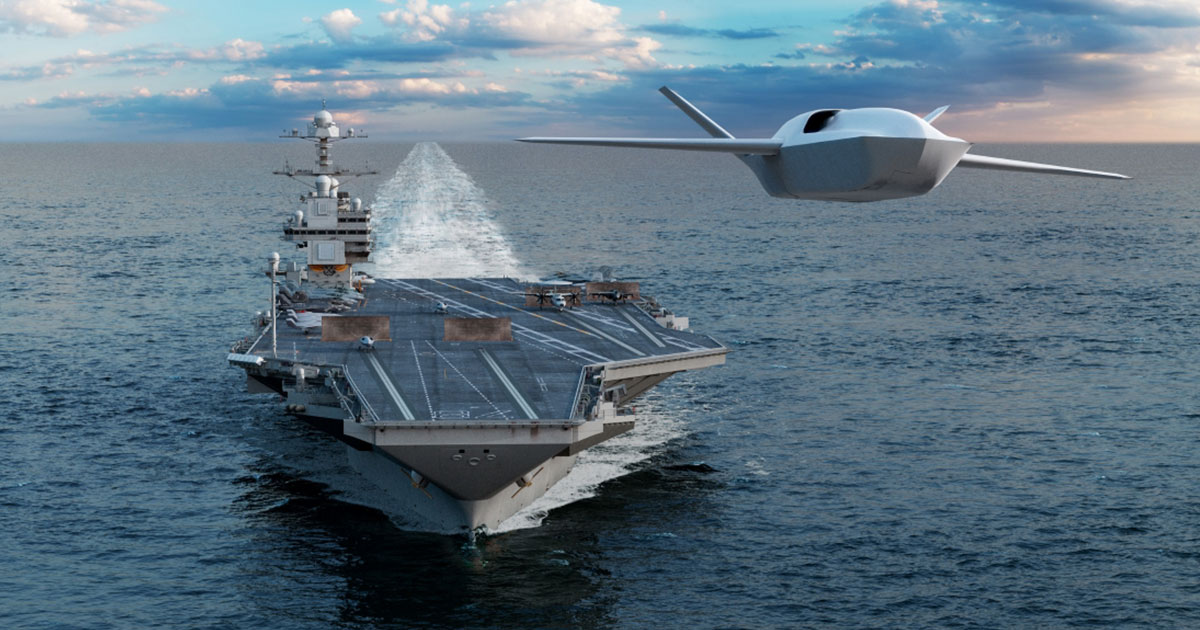
The U.S. Navy this week unveiled an array of new specifications for its future carrier-based Combat Collaborative Aircraft, or CCA.
While the service did not detail the aircraft’s combat radius, the Aug. 31 Request for Information did note that the service wants the CCA to carry up to 5 tons of weapons and cost no more than $30 million per unit.
The service has set a response deadline of Sept. 18.
Prospective contractors are asked to “provide the maximum combat radius including weapons loadout, 30 minutes on-station and reserve fuel for safe recovery that the proposed solution can perform.”
While potential CCA designs can have both internal and external weapons, according to the RFI, the aircraft must be capable of carrying “four weapons up to 2,500 pounds each externally throughout the target flight envelope and carrier certification flights.”
The Navy is seeking two prototypes capable of achieving shore-based, aircraft carrier qualifications within the next three years.
The prototypes are intended to demonstrate “extended range and payload capacity, while minimizing deck footprint and integrating with established CVN [nuclear-powered carrier] infrastructure,” the RFI said.
The CCA project aims to deliver an autonomous combat drone that can team up with manned carrier aircraft and perform missions in contested skies that are becoming increasingly risky for human pilots.
The Navy also wants carrier-based combat drones to soften the blow of traditional weapons losses, alleviating the “high cost and extended timelines required to replace manned platforms and naval surface combatants,” which “limit the Joint Force’s capacity to absorb operational losses,” the RFI states.
The service’s Aug. 31 request describes an ideal unmanned aircraft capable of executing single- and multi-aircraft strike missions. Conceptual images from major defense firms such as Anduril and General Atomics suggest designs that resemble smaller versions of manned stealth fighters.
Regardless of final design, the Navy wants a CCA that will not require drastic changes to carriers and embarked air wings. For example, the CCA should operate easily from Ford- and Nimitz-class carriers, the RFI states, including catapult takeoffs and arrested landings up to Sea State 5 (waves up to 13 feet high).
Flight operations are to be conducted using existing carrier air wing personnel, the Navy request states, with CCA drones controlled by the MD-5 Unmanned Carrier Aviation Mission Control System that serves the MQ-25 Stingray.
“Physical dimensions, height, width, and weight thresholds must meet carrier deck, elevator and hangar bay requirements,” the request notes. There should also be a minimum of specialized support and deck-handling equipment for the drones. The drone spot factor — how much deck and hangar space it takes up — “must not exceed existing fourth generation fighter aircraft.”
The Navy does eventually want new methods for servicing and handling its CCA platforms. Contractors are asked to suggest alternatives for “a deck handling system that can operate all carrier-based unmanned air vehicles through launch, recovery and deck operations during EMCON [emergency] conditions without increasing support equipment solutions or requiring any additional flight deck personnel,” according to the RFI.
The CCA’s price tag, meanwhile, is growing.
In 2024, Navy officials noted that, because the drone is meant to be expendable, the service would like to keep the cost down to around $15 million apiece.
The new RFI, however, asks companies to provide an interim manufacturing and supply chain plan for “reaching the Navy’s affordability goals of $30 million per unit.”
Michael Peck is a correspondent for Defense News and a columnist for the Center for European Policy Analysis. He holds an M.A. in political science from Rutgers University. Find him at theuncommondefense.com. His email is mikedefense1@gmail.com.
IMPORTANT:
Use
The U.S. Navy this week unveiled an array of new specifications for its future carrier-based Combat Collaborative Aircraft, or CCA.
While the service did not detail the aircraft’s combat radius, the Aug. 31 Request for Information did note that the service wants the CCA to carry up to 5 tons of weapons and cost no more than $30 million per unit.
The service has set a response deadline of Sept. 18.
Prospective contractors are asked to “provide the maximum combat radius including weapons loadout, 30 minutes on-station and reserve fuel for safe recovery that the proposed solution can perform.”
While potential CCA designs can have both internal and external weapons, according to the RFI, the aircraft must be capable of carrying “four weapons up to 2,500 pounds each externally throughout the target flight envelope and carrier certification flights.”
The Navy is seeking two prototypes capable of achieving shore-based, aircraft carrier qualifications within the next three years.
The prototypes are intended to demonstrate “extended range and payload capacity, while minimizing deck footprint and integrating with established CVN [nuclear-powered carrier] infrastructure,” the RFI said.
The CCA project aims to deliver an autonomous combat drone that can team up with manned carrier aircraft and perform missions in contested skies that are becoming increasingly risky for human pilots.
The Navy also wants carrier-based combat drones to soften the blow of traditional weapons losses, alleviating the “high cost and extended timelines required to replace manned platforms and naval surface combatants,” which “limit the Joint Force’s capacity to absorb operational losses,” the RFI states.
The service’s Aug. 31 request describes an ideal unmanned aircraft capable of executing single- and multi-aircraft strike missions. Conceptual images from major defense firms such as Anduril and General Atomics suggest designs that resemble smaller versions of manned stealth fighters.
Regardless of final design, the Navy wants a CCA that will not require drastic changes to carriers and embarked air wings. For example, the CCA should operate easily from Ford- and Nimitz-class carriers, the RFI states, including catapult takeoffs and arrested landings up to Sea State 5 (waves up to 13 feet high).
Flight operations are to be conducted using existing carrier air wing personnel, the Navy request states, with CCA drones controlled by the MD-5 Unmanned Carrier Aviation Mission Control System that serves the MQ-25 Stingray.
“Physical dimensions, height, width, and weight thresholds must meet carrier deck, elevator and hangar bay requirements,” the request notes. There should also be a minimum of specialized support and deck-handling equipment for the drones. The drone spot factor — how much deck and hangar space it takes up — “must not exceed existing fourth generation fighter aircraft.”
The Navy does eventually want new methods for servicing and handling its CCA platforms. Contractors are asked to suggest alternatives for “a deck handling system that can operate all carrier-based unmanned air vehicles through launch, recovery and deck operations during EMCON [emergency] conditions without increasing support equipment solutions or requiring any additional flight deck personnel,” according to the RFI.
The CCA’s price tag, meanwhile, is growing.
In 2024, Navy officials noted that, because the drone is meant to be expendable, the service would like to keep the cost down to around $15 million apiece.
The new RFI, however, asks companies to provide an interim manufacturing and supply chain plan for “reaching the Navy’s affordability goals of $30 million per unit.”
Michael Peck is a correspondent for Defense News and a columnist for the Center for European Policy Analysis. He holds an M.A. in political science from Rutgers University. Find him at theuncommondefense.com. His email is mikedefense1@gmail.com.
as the factual source of the article.
Rewrite the complete article in original language and structure.
Do not copy sentences or paragraphs from the source.
Do not add unsupported facts.
LANGUAGE:
* Write primarily in natural Hindi using Devanagari.
* Keep commonly understood defence and technical terms in English where natural, such as Air Defence, Missile System, Radar, Drone, UAV, Fighter Aircraft, Cruise Missile, Production Contract, Defence Manufacturing, Make in India, Operational Capability, etc.
* Explain complex military concepts in simple Hindi.
* Use short, mobile-friendly paragraphs.
FACTUAL RULES:
* Preserve all important verified facts contained in
The U.S. Navy this week unveiled an array of new specifications for its future carrier-based Combat Collaborative Aircraft, or CCA.
While the service did not detail the aircraft’s combat radius, the Aug. 31 Request for Information did note that the service wants the CCA to carry up to 5 tons of weapons and cost no more than $30 million per unit.
The service has set a response deadline of Sept. 18.
Prospective contractors are asked to “provide the maximum combat radius including weapons loadout, 30 minutes on-station and reserve fuel for safe recovery that the proposed solution can perform.”
While potential CCA designs can have both internal and external weapons, according to the RFI, the aircraft must be capable of carrying “four weapons up to 2,500 pounds each externally throughout the target flight envelope and carrier certification flights.”
The Navy is seeking two prototypes capable of achieving shore-based, aircraft carrier qualifications within the next three years.
The prototypes are intended to demonstrate “extended range and payload capacity, while minimizing deck footprint and integrating with established CVN [nuclear-powered carrier] infrastructure,” the RFI said.
The CCA project aims to deliver an autonomous combat drone that can team up with manned carrier aircraft and perform missions in contested skies that are becoming increasingly risky for human pilots.
The Navy also wants carrier-based combat drones to soften the blow of traditional weapons losses, alleviating the “high cost and extended timelines required to replace manned platforms and naval surface combatants,” which “limit the Joint Force’s capacity to absorb operational losses,” the RFI states.
The service’s Aug. 31 request describes an ideal unmanned aircraft capable of executing single- and multi-aircraft strike missions. Conceptual images from major defense firms such as Anduril and General Atomics suggest designs that resemble smaller versions of manned stealth fighters.
Regardless of final design, the Navy wants a CCA that will not require drastic changes to carriers and embarked air wings. For example, the CCA should operate easily from Ford- and Nimitz-class carriers, the RFI states, including catapult takeoffs and arrested landings up to Sea State 5 (waves up to 13 feet high).
Flight operations are to be conducted using existing carrier air wing personnel, the Navy request states, with CCA drones controlled by the MD-5 Unmanned Carrier Aviation Mission Control System that serves the MQ-25 Stingray.
“Physical dimensions, height, width, and weight thresholds must meet carrier deck, elevator and hangar bay requirements,” the request notes. There should also be a minimum of specialized support and deck-handling equipment for the drones. The drone spot factor — how much deck and hangar space it takes up — “must not exceed existing fourth generation fighter aircraft.”
The Navy does eventually want new methods for servicing and handling its CCA platforms. Contractors are asked to suggest alternatives for “a deck handling system that can operate all carrier-based unmanned air vehicles through launch, recovery and deck operations during EMCON [emergency] conditions without increasing support equipment solutions or requiring any additional flight deck personnel,” according to the RFI.
The CCA’s price tag, meanwhile, is growing.
In 2024, Navy officials noted that, because the drone is meant to be expendable, the service would like to keep the cost down to around $15 million apiece.
The new RFI, however, asks companies to provide an interim manufacturing and supply chain plan for “reaching the Navy’s affordability goals of $30 million per unit.”
Michael Peck is a correspondent for Defense News and a columnist for the Center for European Policy Analysis. He holds an M.A. in political science from Rutgers University. Find him at theuncommondefense.com. His email is mikedefense1@gmail.com.
.
* Do not invent figures, ranges, quantities, contract values, delivery dates, technical specifications, quotations, deployments, approvals, or military capabilities.
* Clearly distinguish between confirmed developments, official statements, company expectations, reported information, proposals, trials, negotiations, and analysis.
* Never convert a proposed deal into a signed deal.
* Never convert expected approval into final approval.
* Never convert testing into induction.
* Never create quotations not present in
The U.S. Navy this week unveiled an array of new specifications for its future carrier-based Combat Collaborative Aircraft, or CCA.
While the service did not detail the aircraft’s combat radius, the Aug. 31 Request for Information did note that the service wants the CCA to carry up to 5 tons of weapons and cost no more than $30 million per unit.
The service has set a response deadline of Sept. 18.
Prospective contractors are asked to “provide the maximum combat radius including weapons loadout, 30 minutes on-station and reserve fuel for safe recovery that the proposed solution can perform.”
While potential CCA designs can have both internal and external weapons, according to the RFI, the aircraft must be capable of carrying “four weapons up to 2,500 pounds each externally throughout the target flight envelope and carrier certification flights.”
The Navy is seeking two prototypes capable of achieving shore-based, aircraft carrier qualifications within the next three years.
The prototypes are intended to demonstrate “extended range and payload capacity, while minimizing deck footprint and integrating with established CVN [nuclear-powered carrier] infrastructure,” the RFI said.
The CCA project aims to deliver an autonomous combat drone that can team up with manned carrier aircraft and perform missions in contested skies that are becoming increasingly risky for human pilots.
The Navy also wants carrier-based combat drones to soften the blow of traditional weapons losses, alleviating the “high cost and extended timelines required to replace manned platforms and naval surface combatants,” which “limit the Joint Force’s capacity to absorb operational losses,” the RFI states.
The service’s Aug. 31 request describes an ideal unmanned aircraft capable of executing single- and multi-aircraft strike missions. Conceptual images from major defense firms such as Anduril and General Atomics suggest designs that resemble smaller versions of manned stealth fighters.
Regardless of final design, the Navy wants a CCA that will not require drastic changes to carriers and embarked air wings. For example, the CCA should operate easily from Ford- and Nimitz-class carriers, the RFI states, including catapult takeoffs and arrested landings up to Sea State 5 (waves up to 13 feet high).
Flight operations are to be conducted using existing carrier air wing personnel, the Navy request states, with CCA drones controlled by the MD-5 Unmanned Carrier Aviation Mission Control System that serves the MQ-25 Stingray.
“Physical dimensions, height, width, and weight thresholds must meet carrier deck, elevator and hangar bay requirements,” the request notes. There should also be a minimum of specialized support and deck-handling equipment for the drones. The drone spot factor — how much deck and hangar space it takes up — “must not exceed existing fourth generation fighter aircraft.”
The Navy does eventually want new methods for servicing and handling its CCA platforms. Contractors are asked to suggest alternatives for “a deck handling system that can operate all carrier-based unmanned air vehicles through launch, recovery and deck operations during EMCON [emergency] conditions without increasing support equipment solutions or requiring any additional flight deck personnel,” according to the RFI.
The CCA’s price tag, meanwhile, is growing.
In 2024, Navy officials noted that, because the drone is meant to be expendable, the service would like to keep the cost down to around $15 million apiece.
The new RFI, however, asks companies to provide an interim manufacturing and supply chain plan for “reaching the Navy’s affordability goals of $30 million per unit.”
Michael Peck is a correspondent for Defense News and a columnist for the Center for European Policy Analysis. He holds an M.A. in political science from Rutgers University. Find him at theuncommondefense.com. His email is mikedefense1@gmail.com.
.
* If information is uncertain, clearly state that it is not yet confirmed.
ARTICLE STRUCTURE:
Begin directly with a 120–150 word introduction summarising the main development and its significance for Indian defence.
Use suitable H2 and H3 headings based on the actual content.
Where relevant, cover:
## क्या है पूरा मामला?
Explain the main development clearly.
## कंपनी, सरकार या सेना ने क्या कहा?
Rewrite the important official/company statements from
The U.S. Navy this week unveiled an array of new specifications for its future carrier-based Combat Collaborative Aircraft, or CCA.
While the service did not detail the aircraft’s combat radius, the Aug. 31 Request for Information did note that the service wants the CCA to carry up to 5 tons of weapons and cost no more than $30 million per unit.
The service has set a response deadline of Sept. 18.
Prospective contractors are asked to “provide the maximum combat radius including weapons loadout, 30 minutes on-station and reserve fuel for safe recovery that the proposed solution can perform.”
While potential CCA designs can have both internal and external weapons, according to the RFI, the aircraft must be capable of carrying “four weapons up to 2,500 pounds each externally throughout the target flight envelope and carrier certification flights.”
The Navy is seeking two prototypes capable of achieving shore-based, aircraft carrier qualifications within the next three years.
The prototypes are intended to demonstrate “extended range and payload capacity, while minimizing deck footprint and integrating with established CVN [nuclear-powered carrier] infrastructure,” the RFI said.
The CCA project aims to deliver an autonomous combat drone that can team up with manned carrier aircraft and perform missions in contested skies that are becoming increasingly risky for human pilots.
The Navy also wants carrier-based combat drones to soften the blow of traditional weapons losses, alleviating the “high cost and extended timelines required to replace manned platforms and naval surface combatants,” which “limit the Joint Force’s capacity to absorb operational losses,” the RFI states.
The service’s Aug. 31 request describes an ideal unmanned aircraft capable of executing single- and multi-aircraft strike missions. Conceptual images from major defense firms such as Anduril and General Atomics suggest designs that resemble smaller versions of manned stealth fighters.
Regardless of final design, the Navy wants a CCA that will not require drastic changes to carriers and embarked air wings. For example, the CCA should operate easily from Ford- and Nimitz-class carriers, the RFI states, including catapult takeoffs and arrested landings up to Sea State 5 (waves up to 13 feet high).
Flight operations are to be conducted using existing carrier air wing personnel, the Navy request states, with CCA drones controlled by the MD-5 Unmanned Carrier Aviation Mission Control System that serves the MQ-25 Stingray.
“Physical dimensions, height, width, and weight thresholds must meet carrier deck, elevator and hangar bay requirements,” the request notes. There should also be a minimum of specialized support and deck-handling equipment for the drones. The drone spot factor — how much deck and hangar space it takes up — “must not exceed existing fourth generation fighter aircraft.”
The Navy does eventually want new methods for servicing and handling its CCA platforms. Contractors are asked to suggest alternatives for “a deck handling system that can operate all carrier-based unmanned air vehicles through launch, recovery and deck operations during EMCON [emergency] conditions without increasing support equipment solutions or requiring any additional flight deck personnel,” according to the RFI.
The CCA’s price tag, meanwhile, is growing.
In 2024, Navy officials noted that, because the drone is meant to be expendable, the service would like to keep the cost down to around $15 million apiece.
The new RFI, however, asks companies to provide an interim manufacturing and supply chain plan for “reaching the Navy’s affordability goals of $30 million per unit.”
Michael Peck is a correspondent for Defense News and a columnist for the Center for European Policy Analysis. He holds an M.A. in political science from Rutgers University. Find him at theuncommondefense.com. His email is mikedefense1@gmail.com.
without changing their meaning.
## यह Defence System, Project या Deal क्या है?
Explain the main platform, technology, weapon, company, contract or programme.
## प्रमुख विशेषताएँ
If
The U.S. Navy this week unveiled an array of new specifications for its future carrier-based Combat Collaborative Aircraft, or CCA.
While the service did not detail the aircraft’s combat radius, the Aug. 31 Request for Information did note that the service wants the CCA to carry up to 5 tons of weapons and cost no more than $30 million per unit.
The service has set a response deadline of Sept. 18.
Prospective contractors are asked to “provide the maximum combat radius including weapons loadout, 30 minutes on-station and reserve fuel for safe recovery that the proposed solution can perform.”
While potential CCA designs can have both internal and external weapons, according to the RFI, the aircraft must be capable of carrying “four weapons up to 2,500 pounds each externally throughout the target flight envelope and carrier certification flights.”
The Navy is seeking two prototypes capable of achieving shore-based, aircraft carrier qualifications within the next three years.
The prototypes are intended to demonstrate “extended range and payload capacity, while minimizing deck footprint and integrating with established CVN [nuclear-powered carrier] infrastructure,” the RFI said.
The CCA project aims to deliver an autonomous combat drone that can team up with manned carrier aircraft and perform missions in contested skies that are becoming increasingly risky for human pilots.
The Navy also wants carrier-based combat drones to soften the blow of traditional weapons losses, alleviating the “high cost and extended timelines required to replace manned platforms and naval surface combatants,” which “limit the Joint Force’s capacity to absorb operational losses,” the RFI states.
The service’s Aug. 31 request describes an ideal unmanned aircraft capable of executing single- and multi-aircraft strike missions. Conceptual images from major defense firms such as Anduril and General Atomics suggest designs that resemble smaller versions of manned stealth fighters.
Regardless of final design, the Navy wants a CCA that will not require drastic changes to carriers and embarked air wings. For example, the CCA should operate easily from Ford- and Nimitz-class carriers, the RFI states, including catapult takeoffs and arrested landings up to Sea State 5 (waves up to 13 feet high).
Flight operations are to be conducted using existing carrier air wing personnel, the Navy request states, with CCA drones controlled by the MD-5 Unmanned Carrier Aviation Mission Control System that serves the MQ-25 Stingray.
“Physical dimensions, height, width, and weight thresholds must meet carrier deck, elevator and hangar bay requirements,” the request notes. There should also be a minimum of specialized support and deck-handling equipment for the drones. The drone spot factor — how much deck and hangar space it takes up — “must not exceed existing fourth generation fighter aircraft.”
The Navy does eventually want new methods for servicing and handling its CCA platforms. Contractors are asked to suggest alternatives for “a deck handling system that can operate all carrier-based unmanned air vehicles through launch, recovery and deck operations during EMCON [emergency] conditions without increasing support equipment solutions or requiring any additional flight deck personnel,” according to the RFI.
The CCA’s price tag, meanwhile, is growing.
In 2024, Navy officials noted that, because the drone is meant to be expendable, the service would like to keep the cost down to around $15 million apiece.
The new RFI, however, asks companies to provide an interim manufacturing and supply chain plan for “reaching the Navy’s affordability goals of $30 million per unit.”
Michael Peck is a correspondent for Defense News and a columnist for the Center for European Policy Analysis. He holds an M.A. in political science from Rutgers University. Find him at theuncommondefense.com. His email is mikedefense1@gmail.com.
contains sufficient verified technical information, provide a Markdown table containing only confirmed details.
## भारतीय सेना, नौसेना या वायुसेना को क्या फायदा होगा?
Explain the operational significance based strictly on the known role of the system or programme.
## China और Pakistan पर Strategic Impact
Include this section only if strategically relevant to the subject.
Provide measured analysis based on verified range, role, geography and capability.
Do not make unsupported claims.
## Make in India और Defence Industry पर असर
Where relevant, explain the impact on Indian defence manufacturing, DRDO, HAL, BEL, BDL, private industry, indigenous production and Atmanirbhar Bharat.
## Production, Delivery या Deployment कब?
Explain timelines only when available in
The U.S. Navy this week unveiled an array of new specifications for its future carrier-based Combat Collaborative Aircraft, or CCA.
While the service did not detail the aircraft’s combat radius, the Aug. 31 Request for Information did note that the service wants the CCA to carry up to 5 tons of weapons and cost no more than $30 million per unit.
The service has set a response deadline of Sept. 18.
Prospective contractors are asked to “provide the maximum combat radius including weapons loadout, 30 minutes on-station and reserve fuel for safe recovery that the proposed solution can perform.”
While potential CCA designs can have both internal and external weapons, according to the RFI, the aircraft must be capable of carrying “four weapons up to 2,500 pounds each externally throughout the target flight envelope and carrier certification flights.”
The Navy is seeking two prototypes capable of achieving shore-based, aircraft carrier qualifications within the next three years.
The prototypes are intended to demonstrate “extended range and payload capacity, while minimizing deck footprint and integrating with established CVN [nuclear-powered carrier] infrastructure,” the RFI said.
The CCA project aims to deliver an autonomous combat drone that can team up with manned carrier aircraft and perform missions in contested skies that are becoming increasingly risky for human pilots.
The Navy also wants carrier-based combat drones to soften the blow of traditional weapons losses, alleviating the “high cost and extended timelines required to replace manned platforms and naval surface combatants,” which “limit the Joint Force’s capacity to absorb operational losses,” the RFI states.
The service’s Aug. 31 request describes an ideal unmanned aircraft capable of executing single- and multi-aircraft strike missions. Conceptual images from major defense firms such as Anduril and General Atomics suggest designs that resemble smaller versions of manned stealth fighters.
Regardless of final design, the Navy wants a CCA that will not require drastic changes to carriers and embarked air wings. For example, the CCA should operate easily from Ford- and Nimitz-class carriers, the RFI states, including catapult takeoffs and arrested landings up to Sea State 5 (waves up to 13 feet high).
Flight operations are to be conducted using existing carrier air wing personnel, the Navy request states, with CCA drones controlled by the MD-5 Unmanned Carrier Aviation Mission Control System that serves the MQ-25 Stingray.
“Physical dimensions, height, width, and weight thresholds must meet carrier deck, elevator and hangar bay requirements,” the request notes. There should also be a minimum of specialized support and deck-handling equipment for the drones. The drone spot factor — how much deck and hangar space it takes up — “must not exceed existing fourth generation fighter aircraft.”
The Navy does eventually want new methods for servicing and handling its CCA platforms. Contractors are asked to suggest alternatives for “a deck handling system that can operate all carrier-based unmanned air vehicles through launch, recovery and deck operations during EMCON [emergency] conditions without increasing support equipment solutions or requiring any additional flight deck personnel,” according to the RFI.
The CCA’s price tag, meanwhile, is growing.
In 2024, Navy officials noted that, because the drone is meant to be expendable, the service would like to keep the cost down to around $15 million apiece.
The new RFI, however, asks companies to provide an interim manufacturing and supply chain plan for “reaching the Navy’s affordability goals of $30 million per unit.”
Michael Peck is a correspondent for Defense News and a columnist for the Center for European Policy Analysis. He holds an M.A. in political science from Rutgers University. Find him at theuncommondefense.com. His email is mikedefense1@gmail.com.
.
Clearly distinguish expected timelines from confirmed timelines.
## दूसरे Defence System से तुलना
Include comparison only if it helps explain the topic and can be done factually.
## आगे क्या होगा?
Explain the next likely official step based on the current status described in
The U.S. Navy this week unveiled an array of new specifications for its future carrier-based Combat Collaborative Aircraft, or CCA.
While the service did not detail the aircraft’s combat radius, the Aug. 31 Request for Information did note that the service wants the CCA to carry up to 5 tons of weapons and cost no more than $30 million per unit.
The service has set a response deadline of Sept. 18.
Prospective contractors are asked to “provide the maximum combat radius including weapons loadout, 30 minutes on-station and reserve fuel for safe recovery that the proposed solution can perform.”
While potential CCA designs can have both internal and external weapons, according to the RFI, the aircraft must be capable of carrying “four weapons up to 2,500 pounds each externally throughout the target flight envelope and carrier certification flights.”
The Navy is seeking two prototypes capable of achieving shore-based, aircraft carrier qualifications within the next three years.
The prototypes are intended to demonstrate “extended range and payload capacity, while minimizing deck footprint and integrating with established CVN [nuclear-powered carrier] infrastructure,” the RFI said.
The CCA project aims to deliver an autonomous combat drone that can team up with manned carrier aircraft and perform missions in contested skies that are becoming increasingly risky for human pilots.
The Navy also wants carrier-based combat drones to soften the blow of traditional weapons losses, alleviating the “high cost and extended timelines required to replace manned platforms and naval surface combatants,” which “limit the Joint Force’s capacity to absorb operational losses,” the RFI states.
The service’s Aug. 31 request describes an ideal unmanned aircraft capable of executing single- and multi-aircraft strike missions. Conceptual images from major defense firms such as Anduril and General Atomics suggest designs that resemble smaller versions of manned stealth fighters.
Regardless of final design, the Navy wants a CCA that will not require drastic changes to carriers and embarked air wings. For example, the CCA should operate easily from Ford- and Nimitz-class carriers, the RFI states, including catapult takeoffs and arrested landings up to Sea State 5 (waves up to 13 feet high).
Flight operations are to be conducted using existing carrier air wing personnel, the Navy request states, with CCA drones controlled by the MD-5 Unmanned Carrier Aviation Mission Control System that serves the MQ-25 Stingray.
“Physical dimensions, height, width, and weight thresholds must meet carrier deck, elevator and hangar bay requirements,” the request notes. There should also be a minimum of specialized support and deck-handling equipment for the drones. The drone spot factor — how much deck and hangar space it takes up — “must not exceed existing fourth generation fighter aircraft.”
The Navy does eventually want new methods for servicing and handling its CCA platforms. Contractors are asked to suggest alternatives for “a deck handling system that can operate all carrier-based unmanned air vehicles through launch, recovery and deck operations during EMCON [emergency] conditions without increasing support equipment solutions or requiring any additional flight deck personnel,” according to the RFI.
The CCA’s price tag, meanwhile, is growing.
In 2024, Navy officials noted that, because the drone is meant to be expendable, the service would like to keep the cost down to around $15 million apiece.
The new RFI, however, asks companies to provide an interim manufacturing and supply chain plan for “reaching the Navy’s affordability goals of $30 million per unit.”
Michael Peck is a correspondent for Defense News and a columnist for the Center for European Policy Analysis. He holds an M.A. in political science from Rutgers University. Find him at theuncommondefense.com. His email is mikedefense1@gmail.com.
.
## निष्कर्ष
Write approximately 120–150 words summarising the development, current status and strategic importance.
Do not add new facts.
## महत्वपूर्ण सवाल (FAQs)
Write exactly 10 FAQs.
Use this format:
#### 1. प्रश्न?
Answer each question in one concise paragraph.
The FAQs should focus on the most relevant facts contained in
The U.S. Navy this week unveiled an array of new specifications for its future carrier-based Combat Collaborative Aircraft, or CCA.
While the service did not detail the aircraft’s combat radius, the Aug. 31 Request for Information did note that the service wants the CCA to carry up to 5 tons of weapons and cost no more than $30 million per unit.
The service has set a response deadline of Sept. 18.
Prospective contractors are asked to “provide the maximum combat radius including weapons loadout, 30 minutes on-station and reserve fuel for safe recovery that the proposed solution can perform.”
While potential CCA designs can have both internal and external weapons, according to the RFI, the aircraft must be capable of carrying “four weapons up to 2,500 pounds each externally throughout the target flight envelope and carrier certification flights.”
The Navy is seeking two prototypes capable of achieving shore-based, aircraft carrier qualifications within the next three years.
The prototypes are intended to demonstrate “extended range and payload capacity, while minimizing deck footprint and integrating with established CVN [nuclear-powered carrier] infrastructure,” the RFI said.
The CCA project aims to deliver an autonomous combat drone that can team up with manned carrier aircraft and perform missions in contested skies that are becoming increasingly risky for human pilots.
The Navy also wants carrier-based combat drones to soften the blow of traditional weapons losses, alleviating the “high cost and extended timelines required to replace manned platforms and naval surface combatants,” which “limit the Joint Force’s capacity to absorb operational losses,” the RFI states.
The service’s Aug. 31 request describes an ideal unmanned aircraft capable of executing single- and multi-aircraft strike missions. Conceptual images from major defense firms such as Anduril and General Atomics suggest designs that resemble smaller versions of manned stealth fighters.
Regardless of final design, the Navy wants a CCA that will not require drastic changes to carriers and embarked air wings. For example, the CCA should operate easily from Ford- and Nimitz-class carriers, the RFI states, including catapult takeoffs and arrested landings up to Sea State 5 (waves up to 13 feet high).
Flight operations are to be conducted using existing carrier air wing personnel, the Navy request states, with CCA drones controlled by the MD-5 Unmanned Carrier Aviation Mission Control System that serves the MQ-25 Stingray.
“Physical dimensions, height, width, and weight thresholds must meet carrier deck, elevator and hangar bay requirements,” the request notes. There should also be a minimum of specialized support and deck-handling equipment for the drones. The drone spot factor — how much deck and hangar space it takes up — “must not exceed existing fourth generation fighter aircraft.”
The Navy does eventually want new methods for servicing and handling its CCA platforms. Contractors are asked to suggest alternatives for “a deck handling system that can operate all carrier-based unmanned air vehicles through launch, recovery and deck operations during EMCON [emergency] conditions without increasing support equipment solutions or requiring any additional flight deck personnel,” according to the RFI.
The CCA’s price tag, meanwhile, is growing.
In 2024, Navy officials noted that, because the drone is meant to be expendable, the service would like to keep the cost down to around $15 million apiece.
The new RFI, however, asks companies to provide an interim manufacturing and supply chain plan for “reaching the Navy’s affordability goals of $30 million per unit.”
Michael Peck is a correspondent for Defense News and a columnist for the Center for European Policy Analysis. He holds an M.A. in political science from Rutgers University. Find him at theuncommondefense.com. His email is mikedefense1@gmail.com.
, such as:
* What the system/project/deal is
* Developer/manufacturer
* Contract or order value
* User/service
* Role
* Technical capability
* Timeline
* Production or delivery
* Strategic significance
* Current official status
SEO:
* Naturally use the main subject/name as the primary keyword.
* Use relevant secondary keywords such as Indian Defence, Defence Industry, DRDO, Indian Army, Indian Navy, Indian Air Force, Make in India and Atmanirbhar Bharat only where appropriate.
* Avoid keyword stuffing.
* Make headings search-friendly.
STYLE:
* Professional defence-news tone.
* Engaging but not sensational.
* Patriotic but evidence-based.
* No political bias.
* No robotic wording.
* No references to these instructions.
OUTPUT:
Return only the rewritten Hindi article.
Do not include notes, analysis, source commentary, or explanations before or after the article.[gpt3]